+923251066655 , +923261066655
 support@gstrainings.com
 Log In
- Installment Opt. Yes
- Class Mode Onsite / Online
- Duration 2 Months
- Skill level All Level
- Classes 12
- Time 4pm - 5pm
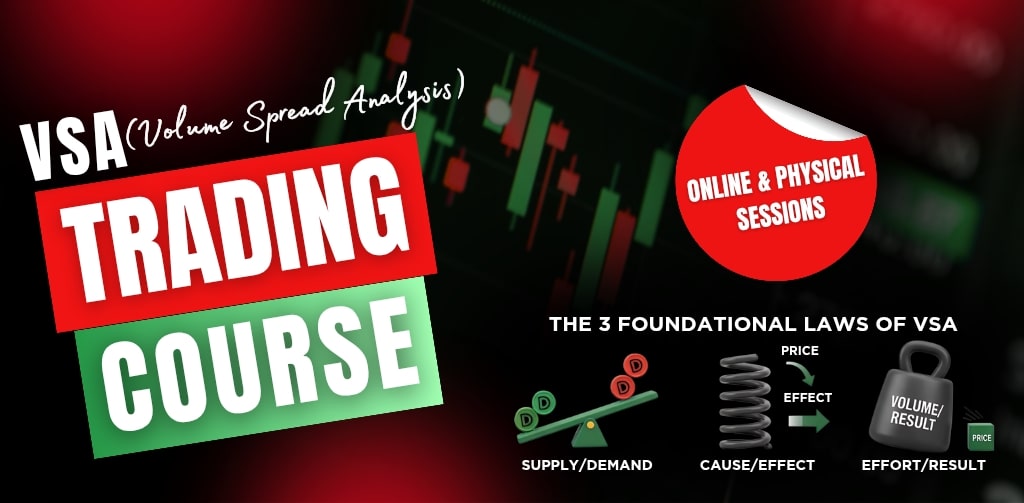

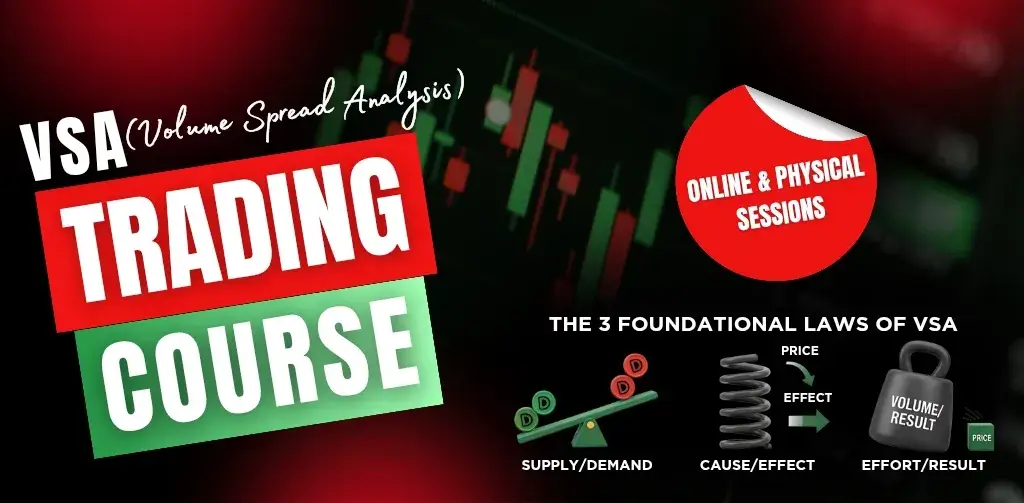
Volume Spread Analysis is a trading method that studies volume, candle spread, and closing price together. This method helps traders understand market strength and weakness. It reveals what Smart Money is doing behind the chart. Many traders trade with emotions. They enter trades based on signals that have no logic. They follow indicators that repaint. They depend on luck. VSA trading removes luck completely. It gives a clear reading of the market. It shows supply, demand, manipulation, and reversals. This course is made by GS Trainings to give students a complete understanding of VSA. The language is simple. The sentences are short. Every topic is practical. You will learn VSA trading for forex, stocks, indices, and crypto. You will learn how volume works. You will also learn how Smart Money uses VSA patterns to control the market.
VSA trading is a technique that reads price bars and volume bars together. It checks how much activity is happening and how the candle reacts to that activity. If the candle spread is wide and the volume is high, Smart Money is active. If the spread is small and the volume is high, Smart Money is hiding something. This method was popularized by Tom Williams in the VSA book that traders still use today. VSA trading strategy works because it follows the laws of supply and demand. When volume rises and the spread widens, demand increases. When volume rises and spread weakens, supply increases. VSA trading strategy helps you understand these changes. It teaches you how to detect manipulation. It shows you where big buyers and sellers are positioned in the chart.
Volume is the first thing VSA checks. Volume shows activity. High volume means something important is happening. Low volume means the market is quiet. Smart Money always leaves a footprint in the form of volume spikes. Volume helps you detect strong buying or strong selling. It also helps you find weakness. Many beginner traders ignore volume. They trade based on candle color only. But VSA teaches you that volume is the truth. Price can lie. Indicators can lie. But volume never lies. Volume Spread Analysis explained this clearly. When the volume is high near resistance, you may see selling. When the volume is high near support, you may see buying. Volume is the first signal of Smart Money VSA behavior.
Spread means the distance between high and low of a candle. Wide spread shows strong movement. Narrow spread shows weak movement. Spread tells you how the price reacted to the volume. If the spread is wide and volume is high, Smart Money is pushing prices. If the spread is narrow but volume is high, Smart Money is absorbing. Spread reading helps you detect VSA patterns. Patterns like Upthrust VSA, No Demand bar, No Supply bar, Buying Climax VSA, and Selling Climax VSA depend on spread. Spread is the second pillar of VSA. Volume is the first. Spread is the second. The closing price is the third. These three work together.
Closing price shows who won the candle. If the close is near the high, buyers are strong. If the close is near the low, sellers are strong. If the close is in the middle, there is balance. Closing price helps you detect strength or weakness. VSA trading strategy uses closing price to confirm VSA signals. If a candle has high volume but closes weakly, it shows supply. If the candle has high volume but closes strong, it shows demand. Closing price also helps detect Test Bar VSA, Upthrust VSA, and Stopping Volume. Smart Money uses closing price manipulation to trap traders. But VSA reveals their game.
Smart Money controls the market. It includes institutions, banks, hedge funds, and large traders. Smart Money uses volume to hide and reveal their actions. VSA trading helps you follow Smart Money instead of fighting them. Smart Money VSA concepts show you accumulation and distribution. Accumulation happens when Smart Money buys slowly. Distribution happens when Smart Money sells slowly. Smart Money uses tricks like Upthrust VSA to trap buyers. They use Selling Climax VSA to push price lower before reversal. They use Buying Climax VSA to trap sellers before a downtrend. Smart Money VSA is the heart of this course.
VSA Wyckoff is a combination of Wyckoff theory and VSA concepts. Wyckoff focused on phases like accumulation, markup, distribution, and markdown. VSA adds volume and spread reading for precision. Both methods work perfectly together. Wyckoff structure helps you understand the bigger picture. VSA helps you take precise entries inside the structure. When combined, they make Smart Money trading clear. GS Trainings teaches both methods side by side. Students understand how Wyckoff principles match VSA patterns.
A No Demand bar appears when buyers are weak. The volume is low. The spread is narrow. The close is in the middle or lower. This bar shows lack of interest from Smart Money. It appears in uptrends before reversals. It is a bearish sign. No Demand VSA helps traders exit buys early. It also confirms weakness in the market.
A No Supply bar appears when sellers are weak. The volume is low. The spread is narrow. The close is near the high. This bar shows Smart Money is not selling. It appears in downtrends before reversals. It is a bullish sign. No Supply VSA helps traders enter long positions early in the reversal.
Buying Climax VSA appears when the volume is extremely high and the spread is wide. The candle closes off the high. Smart Money sells into buying pressure. This ends the uptrend. This pattern shows distribution. Buying Climax VSA is one of the strongest reversal patterns.
Selling Climax VSA appears when the volume is extremely high and the spread is wide but with a weak close. Smart Money buys into panic selling. This ends the downtrend. This pattern shows accumulation. Selling Climax VSA signals a reversal to the upside.
Upthrust VSA appears in a bullish market. The candle spikes up with high volume but closes near the low. Smart Money pushes price up to trap buyers. Then they reverse the market. This is a strong bearish signal.
Stopping Volume appears when the volume is very high and the candle closes well off the low. Smart Money stops the down move. This pattern shows buyers entering the market. It usually appears before a reversal.
A Test Bar VSA is a low volume candle that checks if sellers are still in the market. If the test passes, the trend continues. Tests appear before strong moves. They confirm the direction.
Effort means volume. Result means spread. If effort is high but result is weak, Smart Money is selling. If effort is low but result is strong, Smart Money is buying. Effort versus Result VSA is a core concept in this course. It helps you detect hidden buying or selling.
VSA for day trading helps traders catch intraday moves. It shows where Smart Money enters intraday. It shows where price will reverse. It works on M1, M5, M15, and M30 charts. Day traders benefit most from volume and spread reading.
VSA for swing trading works on H1, H4, and Daily charts. It shows long-term accumulation and distribution. Swing traders use bigger VSA patterns like Stopping Volume, Climax bars, and Test bars. Swing trading becomes easy with VSA.
Volume Spread Analysis forex trading uses tick volume. Tick volume works perfectly in forex. VSA supply and demand patterns appear clearly on forex charts. Traders learn to catch reversals and continuation patterns.
Volume Spread Analysis stocks trading uses real exchange volume. Stocks show cleaner VSA patterns. High volume areas show Smart Money interest. Stocks work very well with VSA because of real volume.
Accumulation means Smart Money buying quietly. Distribution means Smart Money selling quietly. VSA patterns reveal these phases. Buying Climax VSA marks the end of distribution. Selling Climax VSA marks the end of accumulation. GS Trainings teaches how to detect these zones.
TradingView has many VSA indicators. These tools help you mark No Demand, No Supply, Climaxes, Tests, and Upthrust candles. Indicators do not replace VSA knowledge. They only support analysis.
Volume Spread Analysis vs Volume Profile is a common debate. Volume Profile shows volume at price levels. VSA shows volume on every candle. VSA is deeper because it reads intention. Volume Profile is helpful, but VSA is more powerful. Both methods can be combined.
VSA reversal signals include Stopping Volume, Selling Climax, Buying Climax, Upthrust, and No Supply. These signals warn you of trend change. They appear at major levels. They help you avoid traps.
GS Trainings explains VSA in the simplest way. Students of GS Trainings learn with live chart support. They learn real market examples. They understand how Smart Money works. GS Trainings provides complete VSA trading education. Everything is explained in small and easy sentences. Even beginners can learn.
Forex trading is a procedure of buying and selling currencies around the world to earn a profit. You do not need paper notes to do trading; instead, traders exchange currencies like USD, EUR and GBP. Prices also move with the global news and demand. People trade through online platforms to make money from these price changes.
Many people have different opinions about forex trading. Some scholars believe that it is halal, and others think it is haram. Trading done for real currency exchange, without overnight interest or speculation, is considered halal. However, if it involves margin trading with interest, it becomes haram. Always use Islamic or swap-free accounts to trade safely.
In Islam, forex trading is allowed if done with honesty and real currency exchange. Traders must avoid interest-based accounts and gambling-like activities. Many brokers offer Islamic accounts that follow Shariah laws. These accounts do not charge or pay interest.
Forex trading is done in Pakistan through brokers and international brokers. Many traders buy and sell the currency to make a profit. In forex trading, you can create an account, deposit the money and start trading. Different platforms help to trade in forex.
Yes, forex trading is allowed in Pakistan for learning and investment purposes. You can trade through online brokers who follow proper financial rules.
Forex trading is legal and halal in Pakistan. You need authentic brokers and platforms for forex trading. For this SBP and SECP involve exchange activities.
There are many forex trading apps in Pakistan, which include MetaTrader 4 (MT4), MetaTrader 5 (MT5), and TradingView. There are many international applications available for trading.
There are many legal forex trading brokers in Pakistan. Choose those that offer Islamic accounts and follow safe, transparent trading practices.
Fields marked with (*) are mandatory.