+923251066655 , +923261066655
 support@gstrainings.com
 Log In
- Installment Opt. Yes
- Class Mode Onsite / Online
- Duration 2 Months
- Skill level All Level
- Classes Monday - Tuesday
- Time 4pm - 5pm
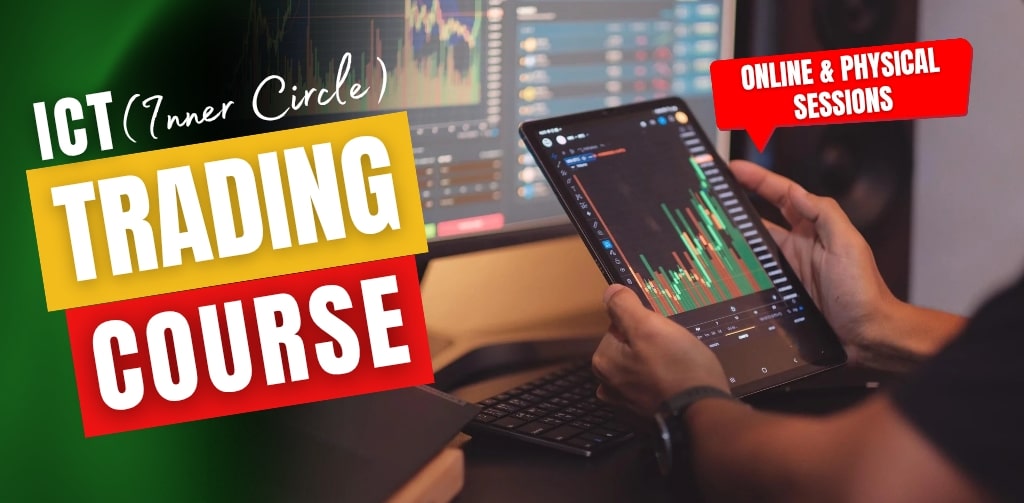

Inner Circle Trading, also known as ICT, is one of the most powerful learning systems in modern forex trading. It teaches you how price moves when big banks and institutions enter the market. The Inner Circle Trading approach focuses on understanding the real logic behind market movements instead of guessing. Many traditional strategies focus on indicators or simple chart patterns. ICT mentorship teaches you how to read prices like a map. When traders follow the Inner Circle Trading Course, they learn why price moves up, down or sideways and what institutions are doing behind the scenes. The ICT trading system is famous around the world. Many new traders want to enter the forex market, but they feel confused with too many strategies. ICT trading solves this problem. It gives you a clean, simple and deeply logical structure. It teaches why the market forms highs and lows, how liquidity works, where fair value gaps appear, and how order blocks create reactions. The goal of ICT trading education is to help you trade with knowledge instead of luck. This full ICT trading course is designed to guide beginners and experienced traders step by step. It includes ICT concepts, ICT strategies, ICT smart money concepts, ICT premium models, ICT entry models, and complete ICT institutional trading logic. You will learn what Inner Circle Trading really means and how professional traders use it every day.
ICT mentorship is the root of the entire smart money trading style. The mentorship teaches traders to think like institutions. When you study ICT mentorship lessons, you learn how the market creates setups and why these setups repeat every day. The ICT mentorship system focuses on clarity, discipline, and understanding market clues. ICT mentorship does not use indicators. It uses price action and institutional data. Many traders join the Inner Circle Trading Mentorship because they want to break free from emotional trading. They want a trading system based on logic. ICT mentorship gives them this. In this ICT trading course, we follow the same mentorship principles. You learn slowly, step by step, with clear examples and simple explanations. The purpose is to help you master ICT trading techniques in a smooth and natural way.
The heart of ICT trading is understanding the main ICT concepts. These ICT concepts include market structure, order blocks, liquidity, entry models, premium and discount zones, and fair value gaps. All these concepts work together. When you learn ICT trading in depth, these ideas become easy and natural. Market structure is the foundation. Liquidity is the target. Order blocks are the footprints of institutions. Fair value gaps show inefficiency. Premium and discount zones show where price is expensive or cheap. ICT entry models show the perfect moment to enter. ICT strategies connect all these ideas into a complete trading technique. The ICT trading course helps you understand each concept with real charts and examples. You also learn how to combine different ICT concepts to form strong setups. ICT forex trading becomes clearer when you understand how all these elements connect.
Smart money trading is the core of Inner Circle Trading. ICT smart money concepts show you how institutional traders move the market. Instead of trading with retail indicators or guessing the trend, ICT smart money concepts teach you to follow the banks. Institutions create liquidity pools. They manipulate prices to collect orders. They use stop hunts to remove traders before the real move starts. ICT liquidity concepts explain all these actions. Smart money trading becomes easy when you understand the logic behind price moves. ICT smart money concepts include: How liquidity is built How institutional moves start Why price hunts highs and lows How fair value gaps form How order blocks show institutional zones How displacement creates momentum How premium and discount zones guide entries In this ICT trading course, you learn how to read the market like a smart money trader. You no longer chase prices. You wait for setups that follow the institutional roadmap.
ICT market structure is one of the most important topics in ICT trading education. Market structure tells you the true direction of the market. ICT market structure is not confusing. It is simple once you understand it. The market always moves in three ways: Uptrend Downtrend Consolidation ICT concepts explain how each trend forms. You learn how to identify BOS (Break of Structure) and CHoCH (Change of Character). These terms show when the market shifts direction. ICT market structure also teaches you how swing points form. This allows you to understand the next possible move. Many traders lose money because they do not understand market structure. This ICT trading course fixes that problem completely.
Liquidity is the fuel of the market. Without liquidity, institutions cannot move large positions. ICT liquidity concepts explain how liquidity works. The price does not move randomly. It moves towards liquidity pools. ICT liquidity concepts explain: Buy-side liquidity Sell-side liquidity Equal highs as liquidity Equal lows as liquidity Trendline liquidity Stop-loss liquidity Internal vs external liquidity When you learn ICT forex trading deeply, you understand that liquidity is always the target. Institutions move prices to collect orders. This creates predictable movements. ICT liquidity concepts help you identify where these movements will happen. Once you learn liquidity mapping, trading becomes smoother.
ICT order blocks are the footprints of institutional traders. When banks and institutions place large orders, the market leaves a signature. This signature is called an order block. ICT order blocks tell us where institutions entered the market. They show the origin of strong moves. They also show where price may return before continuing the trend. ICT order blocks include: Bullish order blocks Bearish order blocks Rebalanced order blocks Mitigated order blocks Unmitigated order blocks ICT order blocks only work well when combined with ICT market structure and ICT liquidity concepts. In this trading course, you learn how to identify clean order blocks and avoid false ones. You also learn how to trade directly from order blocks using ICT entry models.
Fair value gaps (FVGs) are one of the most popular ICT concepts. They show inefficiency in price. When institutions move the market fast, price does not fill all levels. This creates a fair value gap. An FVG is a three-candle pattern. When price returns to the fair value gap, it often continues in the same direction. Many ICT trading strategies use FVGs as the main entry point. ICT fair value gaps appear in all timeframes, from 1 minute to daily charts. In this ICT trading course, you learn how to: Identify valid FVGs Use FVGs with order blocks Use FVGs with liquidity Use FVGs for day trading setups Use FVGs for swing trading setups
ICT premium models show when price is expensive. ICT discount models show when price is cheap. This concept helps you decide whether to buy or sell. Price in the premium zone is often used for selling. Price in the discount zone is often used for buying. ICT premium and discount zones are created using Fibonacci or market structure swings. When you combine ICT premium models with ICT market structure and ICT order blocks, your accuracy increases. ICT premium models are essential for smart money trading. They prevent you from buying at the top or selling at the bottom.
ICT entry models make trading simple. Once you learn the structure and logic, entry becomes easy. Popular ICT entry models include: ICT 2022 model Order block entry Fair value gap entry FVG + OB combo entry Liquidity sweep entry Breaker block entry Displacement entry These ICT entry models are designed for both new and professional traders. They help you avoid emotional trades. You only take entries when all conditions match. This keeps trading clean and structured. In this ICT trading course, you learn how to use every ICT entry model with real examples. You also learn how to manage risk, how to place stop-losses using smart money rules, and how to take partial profits professionally.
ICT day trading is perfect for traders who want quick trades. ICT concepts fit day trading very well because liquidity and fair value gaps appear every day. ICT day trading includes: London session setups New York session setups Killzones Judas swing Daily bias Intraday structure When you use ICT smart money concepts in day trading, you can find 2–5 clean setups daily. ICT day trading works best with small timeframes and strong market structure signals.
ICT swing trading is better for traders who want fewer trades but bigger moves. ICT swing trading uses higher timeframes. It focuses on: Weekly and daily structure Liquidity zones Strong order blocks Daily or weekly fair value gaps Institutional reference points ICT swing trading helps you stay calm. You do not need to watch the charts all day. You simply mark levels and wait for price to come to you. This part of the ICT trading course helps you build long-term consistency.
ICT institutional trading teaches you to think like a professional. The market is not random. Institutions want liquidity. They move prices in a certain direction only when liquidity is available. ICT institutional trading teaches you: Patience Discipline Chart reading Risk control Directional bias Stop placement Partial profit rules You learn how to behave like an institutional trader who waits for quality setups. This mindset is more important than any strategy.
This ICT trading course covers everything you need to master Inner Circle Trading concepts. You learn ICT market structure, ICT order blocks, ICT liquidity concepts, ICT fair value gaps, ICT premium and discount models, ICT entry models, ICT trading techniques, and ICT institutional trading. Whether you want to become an ICT day trader or an ICT swing trader, this course gives you the full foundation. You learn smart money trading in a clear and simple way. You build a strong mindset. You learn how to read the market with confidence. This course prepares you for real trading, real setups, and real performance. By mastering ICT strategies and ICT concepts step by step, you become a more confident and stable trader.
By the end of this course, students will be able to:
Forex trading is a procedure of buying and selling currencies around the world to earn a profit. You do not need paper notes to do trading; instead, traders exchange currencies like USD, EUR and GBP. Prices also move with the global news and demand. People trade through online platforms to make money from these price changes.
Many people have different opinions about forex trading. Some scholars believe that it is halal, and others think it is haram. Trading done for real currency exchange, without overnight interest or speculation, is considered halal. However, if it involves margin trading with interest, it becomes haram. Always use Islamic or swap-free accounts to trade safely.
In Islam, forex trading is allowed if done with honesty and real currency exchange. Traders must avoid interest-based accounts and gambling-like activities. Many brokers offer Islamic accounts that follow Shariah laws. These accounts do not charge or pay interest.
Forex trading is done in Pakistan through brokers and international brokers. Many traders buy and sell the currency to make a profit. In forex trading, you can create an account, deposit the money and start trading. Different platforms help to trade in forex.
Yes, forex trading is allowed in Pakistan for learning and investment purposes. You can trade through online brokers who follow proper financial rules.
Forex trading is legal and halal in Pakistan. You need authentic brokers and platforms for forex trading. For this SBP and SECP involve exchange activities.
There are many forex trading apps in Pakistan, which include MetaTrader 4 (MT4), MetaTrader 5 (MT5), and TradingView. There are many international applications available for trading.
There are many legal forex trading brokers in Pakistan. Choose those that offer Islamic accounts and follow safe, transparent trading practices.
Fields marked with (*) are mandatory.